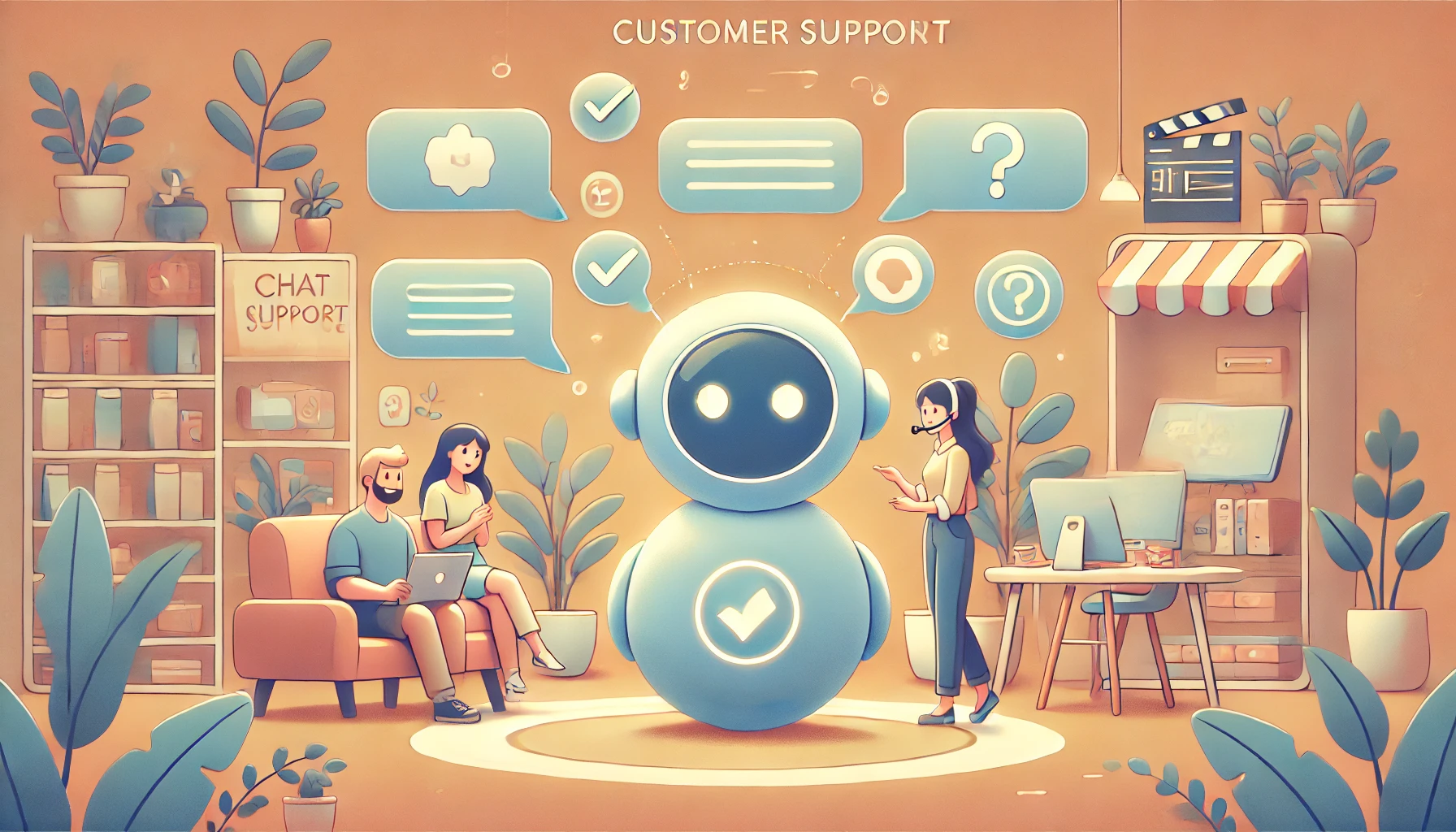
Chatbots for customer service have become one of the most powerful tools for companies looking to scale support operations, reduce response times, and deliver better customer experiences. In 2026, automation is no longer optional—customers expect fast, accurate, and always-on support.
Thanks to advances in artificial intelligence, natural language processing, and system integrations, modern chatbots can handle complex conversations, automate entire processes, and work seamlessly across multiple channels.
In this guide, you’ll learn what chatbots for customer service are, how they work, their main benefits, real-world use cases, and how to implement them effectively to achieve measurable results.
Automate Your Customer Support with AI
At Waibot, we build custom AI-powered chatbots designed to automate customer service processes, reduce operational costs, and improve customer satisfaction.
Our solutions are tailored to your business workflows—not generic templates.
👉 Learn how Waibot can help you implement chatbots for customer service:
https://automation.waibot.io
What Are Chatbots for Customer Service?
Chatbots for customer service are conversational systems powered by artificial intelligence that interact with customers through text or voice. Their main purpose is to answer questions, resolve issues, and guide users automatically without requiring human intervention.
Unlike traditional rule-based bots, modern chatbots use AI and large language models, enabling them to:
- Understand user intent and context
- Maintain natural, human-like conversations
- Learn from previous interactions
- Integrate with CRMs, ticketing systems, ERPs, and databases
This evolution has made chatbots a core component of digital customer experience strategies.
Key Benefits of Chatbots for Customer Service
Implementing chatbots for customer service delivers clear advantages for both businesses and customers:
1. 24/7 Customer Support
Chatbots provide uninterrupted support at any time of day, including nights, weekends, and holidays—without increasing staffing costs.
2. Lower Operational Costs
By automating repetitive inquiries, companies reduce the workload on support teams. According to IBM, AI-powered chatbots can cut customer service costs by up to 30%.
3. Faster Response Times
Customers receive instant answers, eliminating long wait times and improving satisfaction.
4. Unlimited Scalability
A single chatbot can manage thousands of conversations simultaneously, something impossible for human teams.
Most Common Use Cases in 2026
Today, chatbots for customer service go far beyond answering FAQs. The most effective use cases include:
- First-level technical support
- Order tracking and status updates
- Appointment scheduling
- Ticket creation and management
- Internal process automation
- Omnichannel support (website, WhatsApp, social media)
Leading platforms such as Salesforce and AWS highlight conversational AI as a critical driver of customer experience transformation:
https://www.salesforce.com/solutions/customer-service/
https://aws.amazon.com/what-is/chatbot/
AI-Powered Chatbots vs Traditional Chatbots
One major differentiator in 2026 is artificial intelligence. Chatbots for customer service powered by AI clearly outperform traditional bots:
| Traditional Chatbots | AI Chatbots |
|---|---|
| Rule-based responses | Natural language understanding |
| Rigid flows | Dynamic conversations |
| Hard to scale | Continuous learning |
| Poor user experience | Personalized interactions |
How to Implement Chatbots for Customer Service Successfully
To achieve real impact, chatbots for customer service must be implemented strategically:
- Define clear business goals (support, automation, sales)
- Identify repetitive processes suitable for automation
- Design user-centric conversation flows
- Integrate with internal systems and databases
- Track performance metrics such as resolution rate and CSAT
At Waibot, we focus on building chatbots that automate complete workflows—not just conversations.
Chatbots for Customer Service Trends in 2026
Google and enterprise adoption trends show that the most successful chatbots for customer service now include:
- AI models trained with proprietary business data
- Deep CRM and ERP integrations
- End-to-end process automation
- Conversational UX optimization
- Strong data privacy and security compliance
These trends explain why chatbots continue to dominate top search results and enterprise tech stacks.
Final Thoughts
Chatbots for customer service are one of the most impactful technologies for companies aiming to grow efficiently in 2026. When implemented correctly, they reduce costs, improve response times, and significantly enhance customer satisfaction.
If your business is ready to automate customer service with AI, now is the ideal time to adopt intelligent, scalable chatbot solutions.
👉 Discover how Waibot can help you implement chatbots for customer service:
https://automation.waibot.io
Recommended resources on chatbots for customer service:
- 7 Ways AI Chatbots Boost Customer Service 24/7 engagement (LeadHero): https://leadhero.ai/how-ai-chatbots-boost-lead-conversion-rates/
- Guía completa chatbots customer service 2025 multilingual (Botpress): https://botpress.com/es/blog/customer-service-chatbot
- Los 15 chatbots IA principales customer service (Freshworks): https://www.freshworks.com/latam/chatbots/customer-service/
- 10 Mejores Chatbots para Atención al Cliente Lyro AI (Tidio): https://www.tidio.com/es/blog/chatbot-atencion-cliente/
- Los 7 mejores chatbots servicio al cliente 2025 (eesel.ai): https://www.eesel.ai/es/blog/best-chatbots
- Conversational AI customer service increases satisfaction 20% (Contempo Themes): https://contempothemes.com/how-conversational-ai-increases-lead-conversion-rates/
- Chatbots and Customer Service How AI Drives Satisfaction (SmythOS): https://smythos.com/developers/agent-development/chatbots-and-lead-generation/
- Cómo crear chatbot customer service WhatsApp 10 minutos (YouTube): https://www.youtube.com/watch?v=yDGrQfqL240
- 7 beneficios chatbots IA conversacional customer loyalty (Aivo): https://es.aivo.co/blog/ventajas-inteligencia-artificial-atencion-al-cliente
- Chatbot customer service Zendesk multi-channel integration (Zendesk): https://www.zendesk.com.mx/blog/chatbot-atencion-cliente/
No Responses