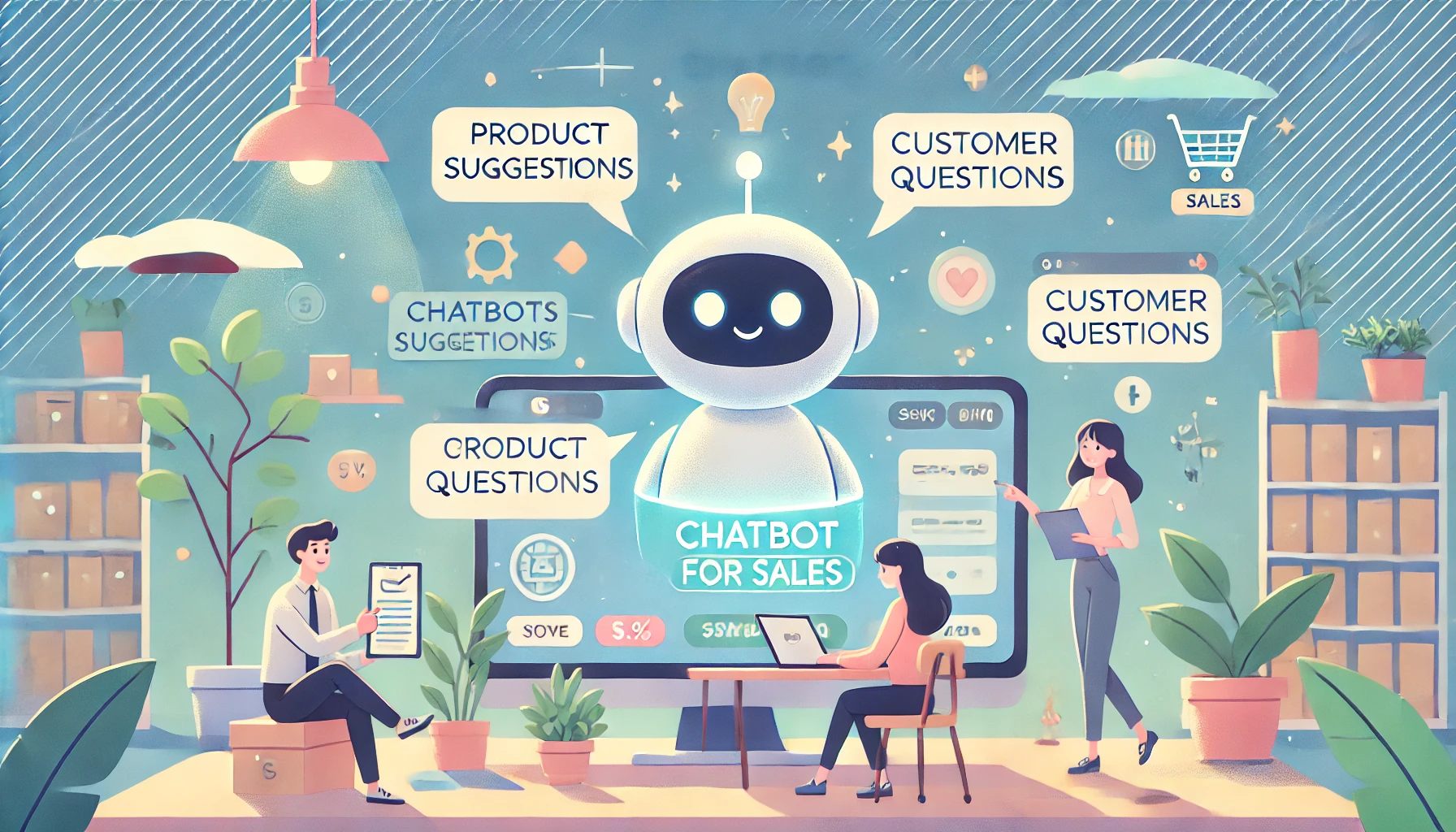
In 2026, speed, personalization, and automation define winning sales teams. Businesses that still rely only on manual follow-ups are losing deals every day. This is why chatbots for sales have become a core technology for companies that want to scale revenue without scaling headcount.
Modern chatbots do far more than answer FAQs. They qualify leads, book meetings, follow up instantly, and guide prospects through the buying journey—24/7. In this article, you’ll learn how sales chatbots work, why they outperform traditional methods, and how to implement them strategically for real ROI.
Automate Your Sales Process Today
At waibot, we design intelligent chatbots that capture leads, qualify prospects, and integrate directly with your CRM and sales stack. If your goal is to close more deals with less friction, our platform is built to support your growth—without complexity.
What Are Chatbots for Sales?
Chatbots for sales are AI-powered conversational agents designed to support and automate sales-related tasks across digital channels like websites, WhatsApp, and landing pages. Unlike basic bots, modern sales chatbots leverage natural language processing, CRM integrations, and behavioral logic to engage prospects in meaningful conversations.
They typically handle:
- Lead capture and qualification
- Product or service recommendations
- Meeting scheduling with sales reps
- Automated follow-ups and reminders
- Sales pipeline data synchronization
According to insights shared by HubSpot, companies that respond to leads within five minutes are significantly more likely to convert. Chatbots make that response time instant.
Why Chatbots for Sales Matter in 2026
Buyer expectations have changed. Prospects want immediate answers, personalized experiences, and zero friction. In 2026, AI maturity and conversational UX are no longer optional advantages—they’re baseline requirements.
Here’s why chatbots are critical today:
- Always-on selling: Sales bots never sleep.
- Scalable qualification: Handle thousands of conversations simultaneously.
- Shorter sales cycles: Remove delays between interest and action.
- Lower CAC: Reduce dependency on manual sales operations.
Research from Gartner predicts that the majority of B2B sales interactions will involve AI-assisted automation, with chatbots playing a central role.
How Chatbots for Sales Increase Conversions
Well-designed chatbots guide prospects step by step instead of pushing them to static forms. They ask qualifying questions, adapt responses in real time, and route hot leads directly to sales teams.
Key conversion drivers include:
- Conversational lead forms with higher completion rates
- Smart branching logic based on intent
- Real-time CRM updates and scoring
- Personalized messaging based on user behavior
Unlike traditional pop-ups, chatbots feel interactive and helpful, not intrusive.
Chatbots for Sales vs Traditional Sales Funnels
Traditional funnels rely heavily on emails, forms, and delayed responses. Chatbots replace friction with conversation.
| Traditional Funnel | Chatbots for Sales |
|---|---|
| Static lead forms | Conversational qualification |
| Delayed follow-ups | Instant engagement |
| Manual scheduling | Automated booking |
| One-size messaging | Personalized flows |
This shift is why platforms like Salesforce emphasize conversational AI as a pillar of modern revenue operations.
Best Practices for Implementing Chatbots for Sales
To rank and convert effectively, your chatbots for sales strategy must align with both SEO and UX principles:
- Deploy chatbots on high-intent pages
- Use clear, sales-focused conversation flows
- Integrate with CRM and analytics tools
- Continuously optimize based on conversation data
- Ensure compliance with data privacy regulations
Avoid generic scripts. High-performing chatbots for sales are designed around real buyer questions and objections.
Why Automation.Waibot.io Is Built for Sales Automation
At automation.waibot.io, we specialize in building chatbots that are conversion-driven, scalable, and deeply integrated into your sales ecosystem. Our solutions are designed for businesses that want measurable outcomes—not just automation for automation’s sake.
By combining AI logic, real-time data, and sales best practices, our chatbots help teams:
- Capture more qualified leads
- Reduce response time to zero
- Increase close rates
- Optimize the entire sales funnel
For a deeper understanding of conversational commerce trends, you can also explore resources from Google and industry research published by McKinsey & Company.
Final Thoughts
In 2026, companies that adopt chatbots are not experimenting—they are executing. Sales automation powered by conversational AI is now a proven growth lever, not a future trend.
If your business wants to compete on speed, experience, and efficiency, investing in chatbots for sales is no longer optional. It’s the smartest way to automate revenue growth in a digital-first world.
Here are top resources on chatbots for sales:
- 5 Best AI Chatbots for Sales 2026: knowledge-based, decision tree, task-specific; lead gen, upsell (Zendesk): https://www.zendesk.com/in/service/messaging/ai-chatbot-for-sales/
- Top 11 AI Sales Chatbots 2026: Chatfuel no-code Messenger bots, Shopify integration (ProProfs): https://www.proprofschat.com/blog/best-sales-chatbot/
- AI Sales Chatbot Platform: qualify leads 24/7, book meetings, CRM sync (Text.com): https://www.chatbot.com/solutions/chatbot-for-sales/
- Top 10 AI Sales Chatbots 2026: Chatsimple Shopify, Watermelon multilingual, ManyChat campaigns (Lindy): https://www.lindy.ai/blog/ai-sales-chatbot
- Chatbot for Sales: qualify prospects, book meetings, nurture leads (Landbot): https://landbot.io/solutions/chatbot-for-sales
- Chatfuel WhatsApp API: sales/support/marketing with ChatGPT (Chatfuel): https://chatfuel.com
- Rep AI eCommerce: Shopify chatbot converts traffic, handles support (HelloRep): https://www.hellorep.ai
No Responses