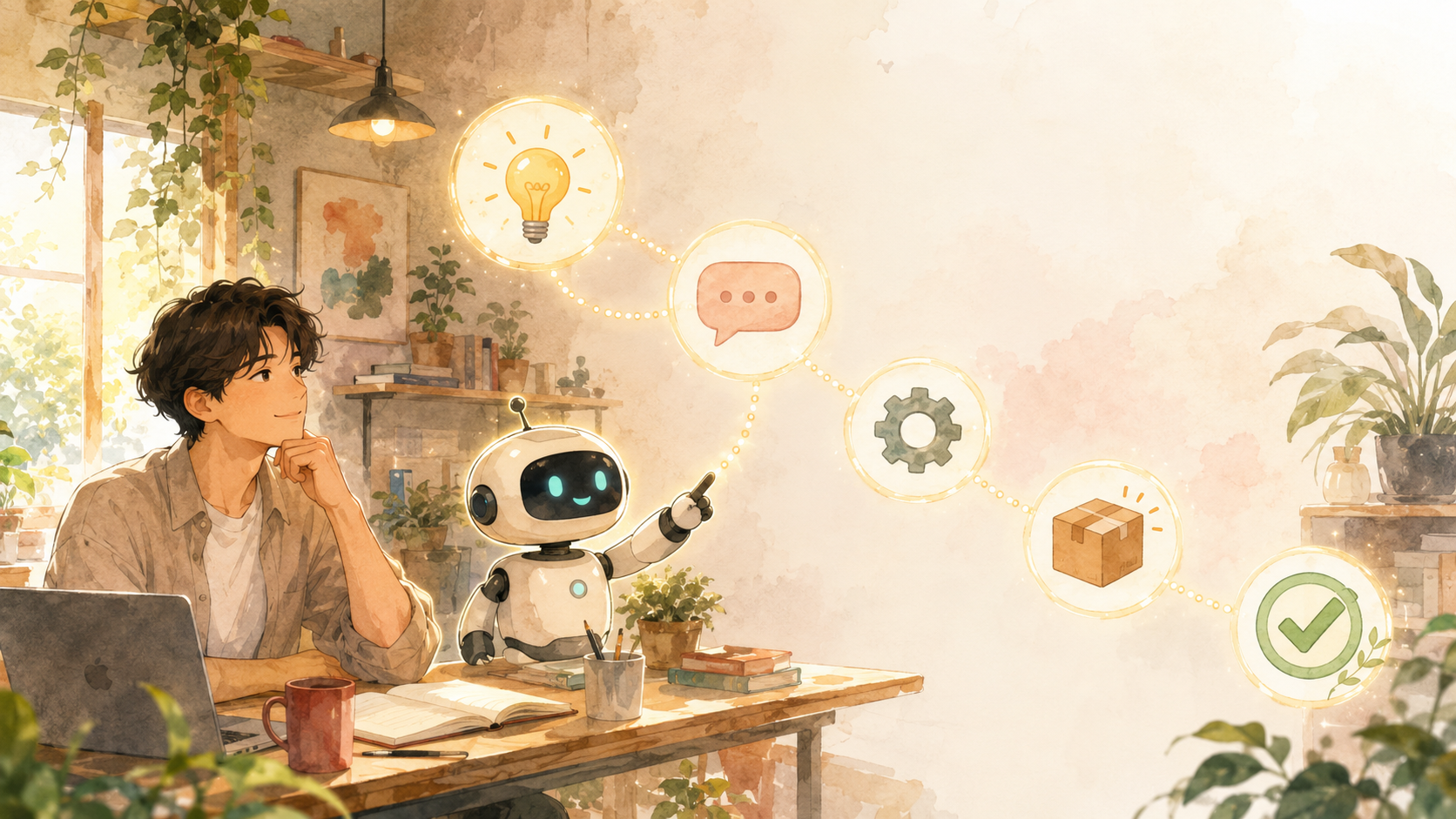
ai and automation are changing how businesses manage customer service, sales, support, and internal operations. In 2026, companies no longer need to rely only on manual work to answer repetitive questions, qualify leads, schedule appointments, collect data, or follow up with customers.
With the right chatbot strategy, ai and automation can help businesses respond faster, reduce human error, improve customer experience, and keep processes active 24/7. Instead of using AI as a disconnected tool, companies can integrate it into real workflows that save time and generate measurable results.
At Waibot, we develop AI chatbots designed to automate business processes. Our solutions help companies improve customer interactions, organize information, qualify prospects, and connect conversations with useful actions.
Automate Your Processes with Waibot
At Waibot, we help businesses implement AI chatbots that are built around their actual processes. Whether you need to automate customer support, lead qualification, appointment scheduling, sales follow-up, or internal requests, we can design a chatbot that helps your team work faster and more efficiently without losing control of the customer experience.
What Is AI and Automation?
ai and automation refers to the use of artificial intelligence to perform, improve, or accelerate tasks that would normally require manual work. Automation executes repetitive actions, while AI adds intelligence by understanding language, identifying patterns, analyzing information, and supporting better decisions.
In simple terms, ai and automation help businesses move from manual, repetitive work to smarter digital workflows. A chatbot, for example, can understand what a customer needs, ask follow-up questions, collect information, and trigger the next step automatically.
IBM explains that intelligent automation combines artificial intelligence with automation technologies to improve business processes and reduce manual effort. You can read more in IBM’s guide to intelligent automation.

Why AI and Automation Matter in 2026
Customer expectations are higher than ever. People want quick answers, personalized attention, and simple digital experiences. At the same time, businesses need to reduce costs, avoid operational bottlenecks, and manage more requests without overloading their teams.
This is where ai and automation become a competitive advantage.
A company that uses AI chatbots can answer common questions instantly, capture customer data, organize requests, and send qualified leads to the right person. This helps the business operate more efficiently while keeping the customer journey clear and responsive.
AWS explains that intelligent automation can combine technologies such as generative AI, machine learning, natural language processing, and robotic process automation to improve business workflows. You can explore more in this AWS resource about intelligent automation.
How AI Chatbots Support Automation
A chatbot with AI is more than a basic messaging tool. When designed correctly, it becomes part of a complete automation system.
For example, a potential customer visits your website and asks about your services. The chatbot understands the request, answers basic questions, collects contact details, qualifies the lead, and notifies the sales team if the prospect is ready for a conversation.
That is the real value of ai and automation: turning a conversation into a business action.
Instead of asking your team to manually read every message, classify every request, and copy information into different systems, a chatbot can handle the first layer of the process and only involve a human when needed.
Benefits of AI and Automation for Businesses
Implementing ai and automation through chatbots can improve several areas of a business.
1. Faster Customer Service
Customers do not want to wait hours for a simple answer. An AI chatbot can respond instantly to frequently asked questions about services, pricing, availability, requirements, schedules, policies, or support options.
This improves the customer experience and reduces pressure on the support team.
2. Better Lead Qualification
Many businesses lose potential customers because they respond too late or fail to follow up. With ai and automation, a chatbot can ask the right questions, identify the customer’s needs, collect contact information, and send qualified leads to the sales team.
This helps sales teams focus on prospects who are more likely to convert.
3. Reduced Manual Work
A chatbot can collect information, create support tickets, send notifications, update records, and connect with internal tools. This reduces repetitive manual tasks and helps teams avoid common data entry errors.
4. 24/7 Availability
Your team may not be available all day, but your chatbot can be. With ai and automation, your business can continue answering questions, receiving requests, and capturing leads outside normal business hours.
This is especially useful for companies with customers in different time zones or businesses that receive messages during nights and weekends.
5. More Organized Processes
AI chatbots can help structure conversations and collect the right information from the beginning. Instead of receiving incomplete messages, your team can get organized data that is easier to act on.
Business Processes That Can Be Automated with AI Chatbots
The best use of ai and automation depends on your company’s workflow. However, AI chatbots are especially useful for high-volume, repetitive, or customer-facing processes.
Customer Support
A chatbot can answer common questions, guide users through basic troubleshooting, create tickets, and escalate complex cases to a human agent.
Sales and Lead Generation
An AI chatbot can qualify leads, recommend services, send follow-up messages, and notify your team when a prospect is ready to move forward.
Appointment Scheduling
Chatbots can collect availability, suggest time slots, confirm appointments, and send reminders automatically.
Internal Requests
Businesses can also use chatbots internally to manage employee questions, support requests, document collection, or operational updates.
Data Collection
Instead of using long forms, companies can collect information through a conversational experience that feels more natural to the user.

Traditional Automation vs. AI-Powered Automation
Traditional automation follows fixed rules. For example, when someone fills out a form, the system sends an email. This is useful, but limited.
ai and automation go further because AI can interpret natural language, understand context, classify messages, and guide users through different paths depending on their answers.
ServiceNow describes AI automation as the use of artificial intelligence technologies to automate tasks and business processes. You can read more in its guide about AI automation.
This makes AI-powered chatbots more flexible than simple rule-based bots. They can understand different ways of asking the same question, respond with relevant information, and trigger workflows based on intent.
How to Start with AI and Automation
The best way to start with ai and automation is not to automate everything at once. A better approach is to choose one process that is repetitive, important, and easy to measure.
Start by asking:
What questions does your team answer every day?
Where do leads get lost?
Which tasks require too much copying and pasting?
What process needs faster response times?
Which customer requests could be handled automatically?
What information should be collected before a human agent gets involved?
Once the process is clear, it becomes easier to design a chatbot that solves a real business problem instead of adding another disconnected tool.
Common Mistakes When Implementing AI and Automation
One common mistake is creating a chatbot without a clear goal. A chatbot should not only greet visitors. It should support a specific process, such as qualifying leads, answering support questions, scheduling calls, or collecting information.
Another mistake is not defining when a human should take over. AI is useful, but some conversations require personal attention. A good chatbot should know when to escalate a case.
A third mistake is not measuring performance. Every ai and automation project should track useful indicators such as response time, number of conversations, qualified leads, resolved requests, and time saved.
Why Choose Waibot for AI Chatbots?
Waibot specializes in developing chatbots for process automation. We do not create generic bots that only provide basic answers. We build chatbot solutions based on your company’s real workflow, goals, services, and customer journey.
With Waibot, your chatbot can help automate customer service, sales, support, appointment scheduling, lead capture, follow-up, internal requests, and more.
The result is a smarter process that helps your business save time, improve customer experience, and scale more efficiently.
FAQ About AI and Automation
What is ai and automation?
ai and automation is the combination of artificial intelligence and automated workflows to perform tasks, improve processes, reduce manual work, and help businesses operate more efficiently.
Can AI chatbots automate customer service?
Yes. AI chatbots can answer common questions, collect customer information, create tickets, provide guidance, and escalate complex cases to human agents.
Does AI replace human teams?
Not necessarily. In most cases, AI helps human teams by handling repetitive tasks and giving employees more time to focus on complex or high-value work.
What is the best first process to automate?
The best first process is usually repetitive, frequent, and measurable. Customer service questions, lead qualification, appointment scheduling, and support requests are common starting points.

Conclusion
In 2026, ai and automation are essential for businesses that want to respond faster, reduce manual work, and create better customer experiences. AI chatbots are one of the most practical ways to start because they connect directly with customer conversations and internal workflows.
When implemented correctly, ai and automation can help your business capture more leads, improve support, reduce errors, and keep processes running even when your team is offline.
Ready to implement ai and automation in your business?
At Waibot, we develop AI chatbots that automate real business processes, from customer service and sales to support, scheduling, and lead follow-up.
Contact us today and discover which process your business should automate first.
External Links:
- Red Hat: AI vs. Automation — A clear guide explaining the difference between artificial intelligence and automation, and how both can work together in business processes.
- Salesforce: What Is AI Automation? — A practical overview of how AI automation uses machine learning and natural language processing to streamline routine workflows.
- Zendesk: Intelligent Automation Benefits and Examples — A business-focused resource about intelligent automation, its benefits, components, and real-world use cases.
- IBM: AI-Powered Automation — An enterprise-level explanation of how AI-powered automation helps improve speed, reduce costs, and optimize business operations.
- IBM: What Is Intelligent Automation? — A detailed guide on how intelligent automation combines AI and automation technologies to improve productivity and business workflows.
 Talk to Mari, the virtual teaching assistant



No Responses