
An elementary school teacher’s assistant can help teachers and schools work from WhatsApp, consult student information, reduce administrative workload, and automate daily school tasks without using complicated systems. For schools in Mexico and other English-speaking or bilingual contexts, a chatbot can become a practical tool for attendance, grades, groups, reports, and available educational resources.
Meet the educational chatbot behind Mari Asistente Docente: a WhatsApp-connected bot that automates school tasks, helps teachers save time, and supports administrative processes from a mobile phone. Mari also includes a complementary web platform for users who prefer to manage information from a browser. You can request a demo here or learn more at mariasistentedocente.com.
What is an elementary school teacher’s assistant?
An elementary school teacher’s assistant is a digital tool that helps teachers consult information, register school data, and automate operational tasks through conversation.
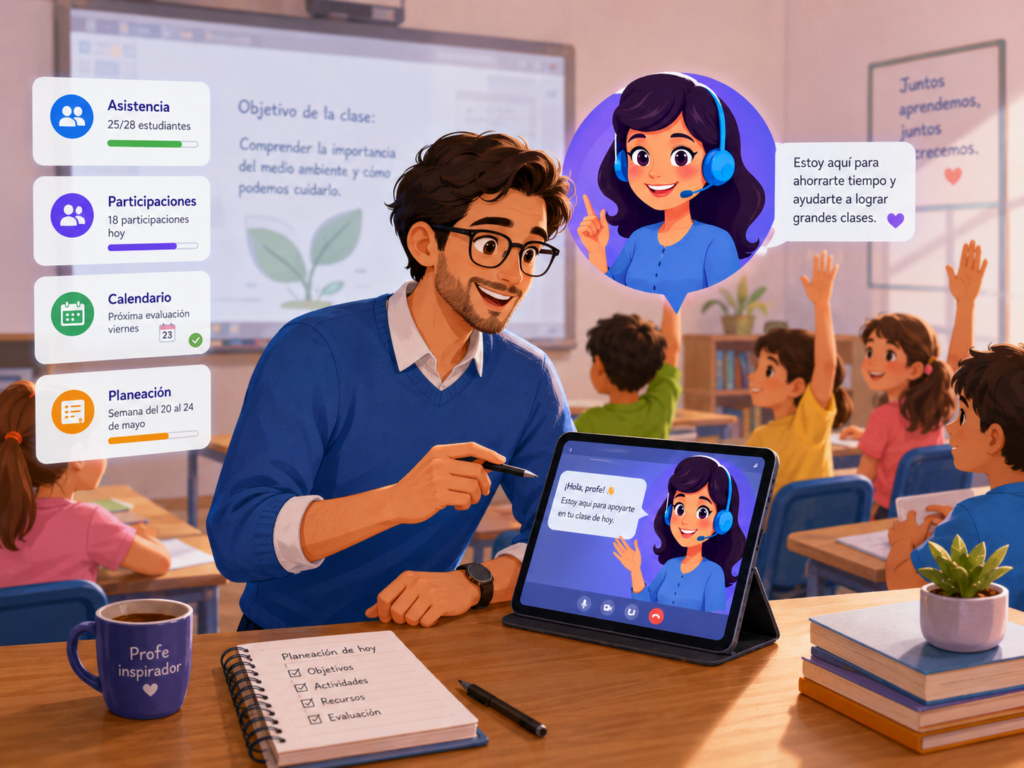
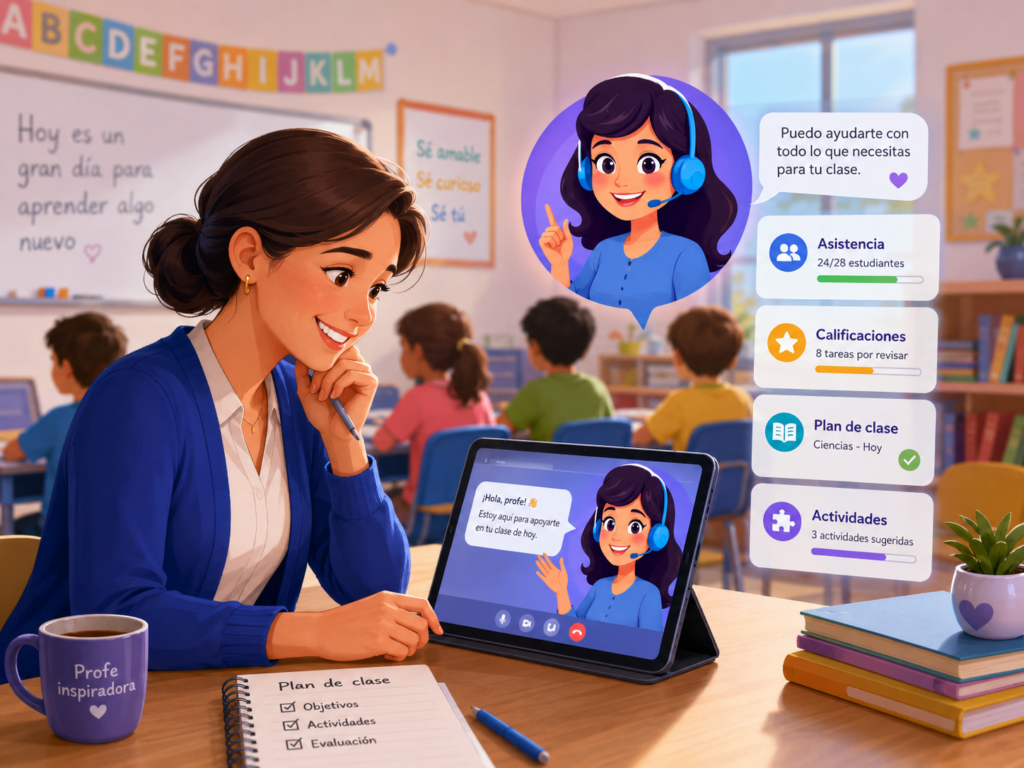
It is not just a support chatbot. In Mari, the bot works as an operational assistant connected to school workflows. Teachers can use WhatsApp to check groups, review students, register attendance, consult grades, access available lesson plans, and follow up on activities.
For schools that want faster processes, this type of educational chatbot reduces manual work and makes information easier to access from a phone.
Why the bot is the main part of school automation
Many schools already have information, but it is often spread across notebooks, spreadsheets, documents, messages, and separate platforms. That creates repeated work and increases the risk of errors.
An elementary school teacher’s assistant connected to WhatsApp solves a simple problem: teachers need quick access to school information without opening complex systems for every task.
The bot becomes a direct entry point for daily school operations. Instead of searching through files or waiting to use a computer, teachers can send a message and consult what they need.
UNESCO highlights digital education as a way to support learning systems and improve access when technology is used with a clear purpose. You can review its digital education work at UNESCO Digital Education.

How Mari helps from WhatsApp
In Mari, the elementary school teacher’s assistant allows teachers to perform practical school tasks from WhatsApp. The goal is to reduce steps, avoid duplicated work, and simplify daily administration.
The chatbot can help with:
- Registering attendance by message.
- Consulting student lists.
- Reviewing groups.
- Checking grades.
- Consulting or generating reports.
- Following up on school activities.
- Accessing available lesson plans.
- Consulting organized content.
- Finding available school resources.
This makes the bot more than a communication channel. It becomes a working tool for school management.
Practical examples for teachers and principals
A teacher can use the elementary school teacher’s assistant to register attendance during the school day, review which students belong to a group, or check grade information from a mobile phone.
A principal can use the bot to consult reports related to attendance, groups, or academic follow-up without depending on scattered files.
A teacher may also need to access available lesson plans or organized educational content. With Mari, this information can be easier to find and use, because it is part of a structured ecosystem.
Less administrative workload, fewer errors
Manual processes can create problems: repeated data entry, incomplete lists, lost notes, delayed reports, or outdated files.
An elementary school teacher’s assistant helps reduce those issues by connecting conversational automation with school processes. When teachers can work through WhatsApp, they spend less time searching and more time focusing on students.
This is especially useful for teachers with limited time between classes, meetings, planning, and school reporting.
UNICEF’s Digital Education work focuses on inclusive and sustainable use of technology to support learning and education systems. More information is available at UNICEF Digital Education.
The web platform as a complement
Although the bot is the main tool, Mari also includes a complementary web platform. This is useful for schools, administrators, or teachers who prefer to consult, review, or manage information from a browser.
That means the elementary school teacher’s assistant can work from WhatsApp for fast daily actions, while the web platform supports broader administration of students, groups, attendance, grades, and reports.
Waibot’s role in conversational automation
Waibot develops chatbots and automation systems for companies and educational institutions. In the Mari ecosystem, Waibot participates in the conversational automation layer and in the connection between the chatbot and external school workflows.
Apps Camelot is the company that created Mari Asistente Docente, bringing together software development, school management tools, educational organization, and automation.
For schools in Mexico, the official education portal from the Secretaría de Educación Pública provides institutional education information at gob.mx/sep.
Why WhatsApp matters for schools
A strong elementary school teacher’s assistant should fit into the tools teachers already use. WhatsApp is familiar, mobile, and simple for many school teams.
This helps avoid adoption barriers. Teachers do not need to learn a complicated system just to consult basic information or complete a daily task.
With Mari, the bot helps schools move from manual processes to conversational automation.
Frequently asked questions
What does an elementary school teacher’s assistant do?
An elementary school teacher’s assistant helps teachers consult information, register attendance, review students, check grades, access available lesson plans, and consult reports from WhatsApp.
Is Mari only a chatbot?
No. Mari has a WhatsApp-connected bot as the main operational tool, plus a complementary web platform, school administration tools, a catalog of available lesson plans, and organized content for teachers.
Can teachers use Mari without a complex platform?
Yes. Teachers can use WhatsApp to consult information and perform school tasks. The web platform is available as a complement for users who prefer using a browser.
Does Mari help with school reports?
Yes. Mari can help teachers and administrators consult or generate reports related to students, groups, attendance, grades, and school follow-up.
Where can schools request a demo?
Schools can request a demo here: https://mari-primaria.appscamelot.com/onboarding-demo. More information is available at https://mariasistentedocente.com.
Conclusion
An elementary school teacher’s assistant on WhatsApp helps schools save time, automate tasks, reduce errors, and consult information from a mobile phone. Mari Asistente Docente combines a WhatsApp bot, conversational automation, available lesson plans, organized educational content, school administration tools, and a complementary web platform.
For educational institutions looking for practical automation, Waibot supports the conversational layer that connects school needs with faster, simpler workflows.
External Links:
- Apps Camelot: School Management System with Mari Teaching Assistant — A web platform with an intelligent bot for managing attendance, grades, students, reports, and school information from mobile devices.
- Waibot: Automated Teaching Assistant via WhatsApp — A WhatsApp-based teaching assistant chatbot for recording attendance, checking student data, generating reports, and automating school operations.
- Waibot: Teaching Assistant Chatbot — A resource on using a chatbot to automate attendance, grades, reports, student queries, and school management tasks from WhatsApp.
- Education Endowment Foundation: Deployment of Teaching Assistants — Evidence-based guidance for schools on how to deploy teaching assistants effectively.
- National Careers Service: Teaching Assistant — Official career profile explaining teaching assistant responsibilities, classroom support duties, working hours, and role expectations.
 Talk to Mari, the virtual teaching assistant



No Responses